来歴 Raireki: where I come from, and why I build what I build, by Liam Kenji Bray
寺井
Temple well.
井の中の蛙、大海を知らず。
A frog in a well does not know the great sea.
来歴
Raireki
Where I come from, and why I build what I build.
Liam Kenji Bray
一井IdoThe well
母の旧姓は寺井。寺の井戸という意味だ。
Every well begins as a question asked of the ground: how deep does this go?
A stone well, cut through: its shaft goes down through layers of ground to water at the bottom, a bucket rises and falls on its rope, and a measure beside it counts the metres. How deep does this go?
My mother folds paper cranes. I’ve watched her do it for as long as I can remember. A square becomes a triangle, then something stranger, until the paper has a neck and a pair of wings. In her hands, a flat square of paper remembers it has wings.
I think that is where I began: with the moment something ordinary turns out to hold far more than it first appeared to.
A square of paper folds along its two diagonals and two midlines, every facet staying flat, lifting into a star; then a paper crane rises out of it and beats its wings.
Her family name is 寺井, Terai. Temple well. A temple is where you go to learn. A well is how you reach what lies beneath. I’ve come to think those two characters describe my life better than anything I could write: learning something, and then needing to know what lies under it.
The two characters of Terai written large. Beside 寺: temple, where you go to learn. Beside 井: well, how you reach what lies beneath.
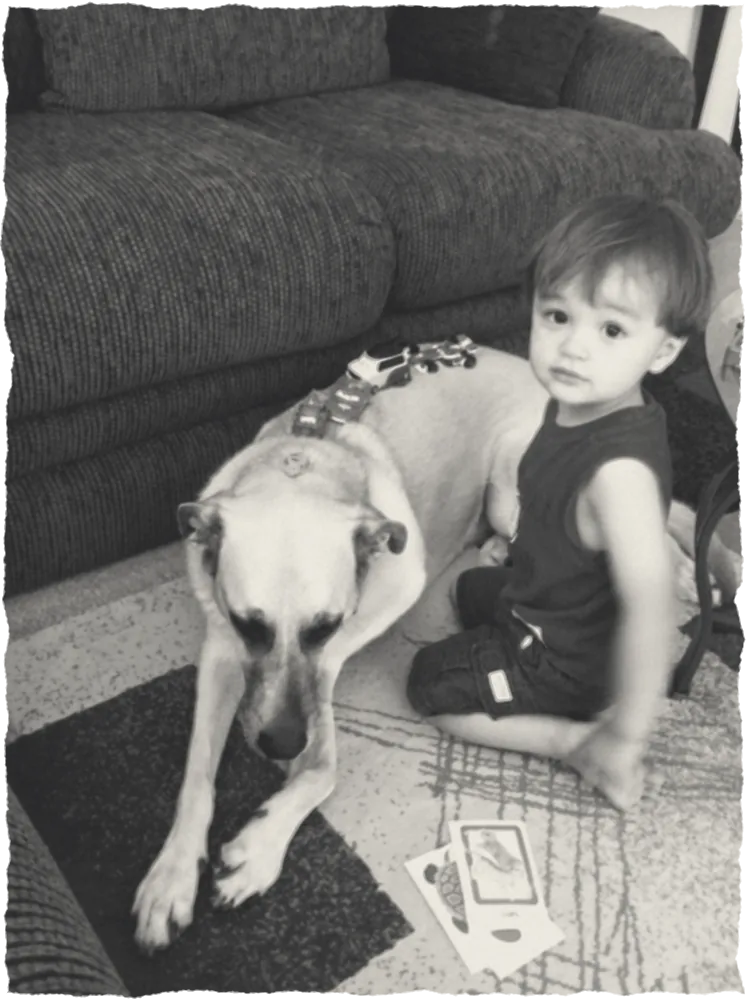
I was born in Fort Worth, Texas. My middle name, Kenji, is my grandfather’s name. I like being called by it, because it means I carry a piece of him wherever I go.
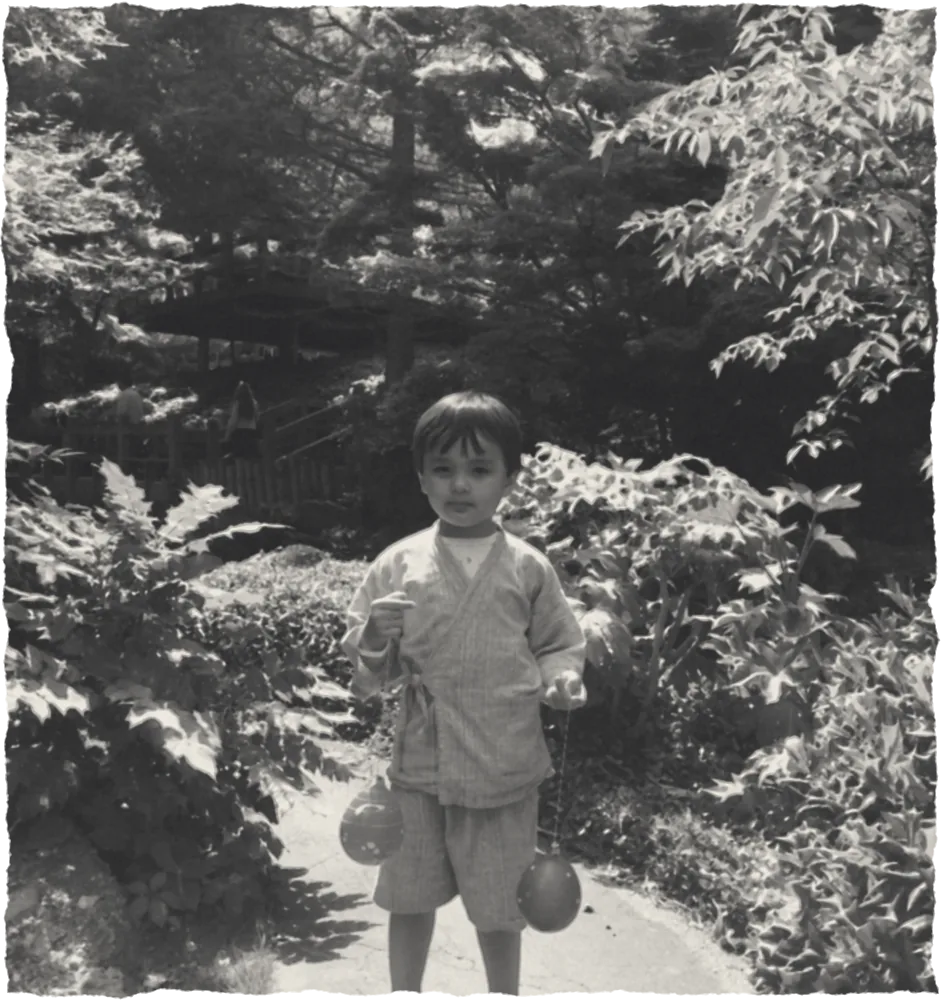
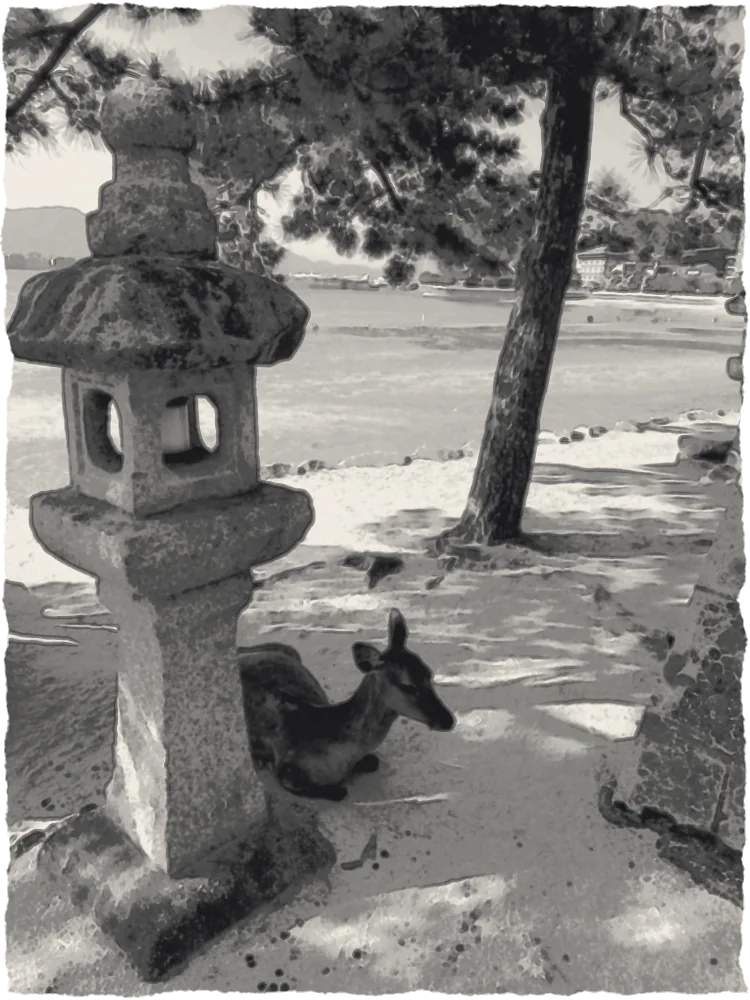
Almost every summer I fly to Funabashi, where my grandparents live, and from there I go everywhere I possibly can: shrines in Kyoto, trails that climb above the clouds, the gate that stands in the sea at Miyajima, water at Miyako so clear it looks like air. I’ve seen nearly every corner of Japan by now, and I’m still not tired of it. I grew up with Japanese and English side by side, until somewhere along the way I stopped noticing the seam.
How far can a person go in pursuit of something they will never fully understand?
二極限KyokugenThe limit
無限を、紙の上で手なずけた。
I didn’t begin with anything beautiful. I began with quadratics: a parabola, the arc of a thrown stone. I spent days on them anyway, the way you watch a tide pool until it starts to move.
A parabola drawn in ink. Parallel rays of light fall onto it and every ray reflects to one point, the focus.
Then came calculus, and with it the question I couldn’t put down: what happens when something becomes infinitely small? The steepness of a curve at a single instant. An area built from slivers too thin to exist.
The books gave me formulas, but I wanted the feeling: to stand inside the limit and watch it close. A result didn’t feel true to me just because it was printed, so I filled page after page of scrap paper proving what the books had already proven. Each proof was a rung lower into the well.
A secant line through two points of a curve. The second point slides toward the first as h shrinks, until the line only touches: the tangent. Beneath the curve, slivers double and thin until they become one smooth area, and the slope of that area is the curve itself.
And it was fun, the most fun I knew how to have. My Algebra II teacher started slipping me extra problem sheets. Those turned into contest math, and contest math turned into long summers chasing problems with a friend. There is no feeling quite like a proof clicking into place, like a brushstroke that couldn’t have gone anywhere else.
A proof without words: L-shaped bands of 1, 3, 5, 7 and 9 squares nest together into a perfect square, showing that the odd numbers add up to a square.
The further I went, the stranger it became. There were spaces I could describe but never see. There were systems whose whole future turned on the smallest disturbance, and currents shaped by swirls no one could watch. Mathematics stopped being a set of answers and became a way of seeing what had been there all along.
A tesseract, the four-dimensional cube, turning: sixteen corners and thirty-two edges, an inner cube and an outer cube that are the same cube seen at different depths in the fourth direction.
A cross-section of a vortex ring in ink, its streamlines circling two cores. Beside it, the field lines of a current loop. The same mathematics draws both shapes; the physics is different.
A current flows past the post of a buoy and sheds a street of alternating swirls, drawn as ink carried by the flow.
Two drops of ink released a hair’s width apart wind around the two wings of the Lorenz attractor, together at first, then on different wings, never leaving the same shape. A small plot shows the distance between them growing exponentially.
Circles of paper nested on tori, every pair linked exactly once: the Hopf fibration, a picture of a four-dimensional sphere seen through a projection.
Then the mathematics began to move. I was simulating four boats sharing a harbor, each one choosing whatever task was best for itself. I expected selfishness to cost a little. So I checked every one of the 81 ways the four boats could split the work, and the answer came out exact: their total cost came to exactly seventeen-fourteenths of what they could have managed together. In bigger simulations, opening a new channel to help the fleet could make every boat slower. Each one was faithfully following its own slope, and it was the wrong slope. I spent a semester of office hours with a professor working out why.
A sea chart of a small harbor with four tasks marked on it. Four boats, drawn from above, take turns moving to whatever task is best for each of them, and a graph of the potential Φ steps down with every move until no boat wants to move: that equilibrium costs seventeen-fourteenths of the best plan. Then tolls are posted, and the same selfish moves carry the team to the best plan.
I didn’t know yet that I would have to learn the same lesson about myself.
I used to fill pages trying to understand why an equation was true. Now I get to watch the answer move across the water.
A scattered cloud of ink drops moves all at once, each along a straight path, none crossing, to its own place in the outline of a paper crane: optimal transport, the cheapest way to turn one shape into another.
三仲間NakamaThe crew
一緒に、少しずつ上手くなった。
For years I built alone. In sixth grade it was a video game called Vertigard. In eighth grade it was robots designed to find each other and lock together, which took me more than two hundred hours of teaching myself CAD. Looking back, even my robots were looking for a team.
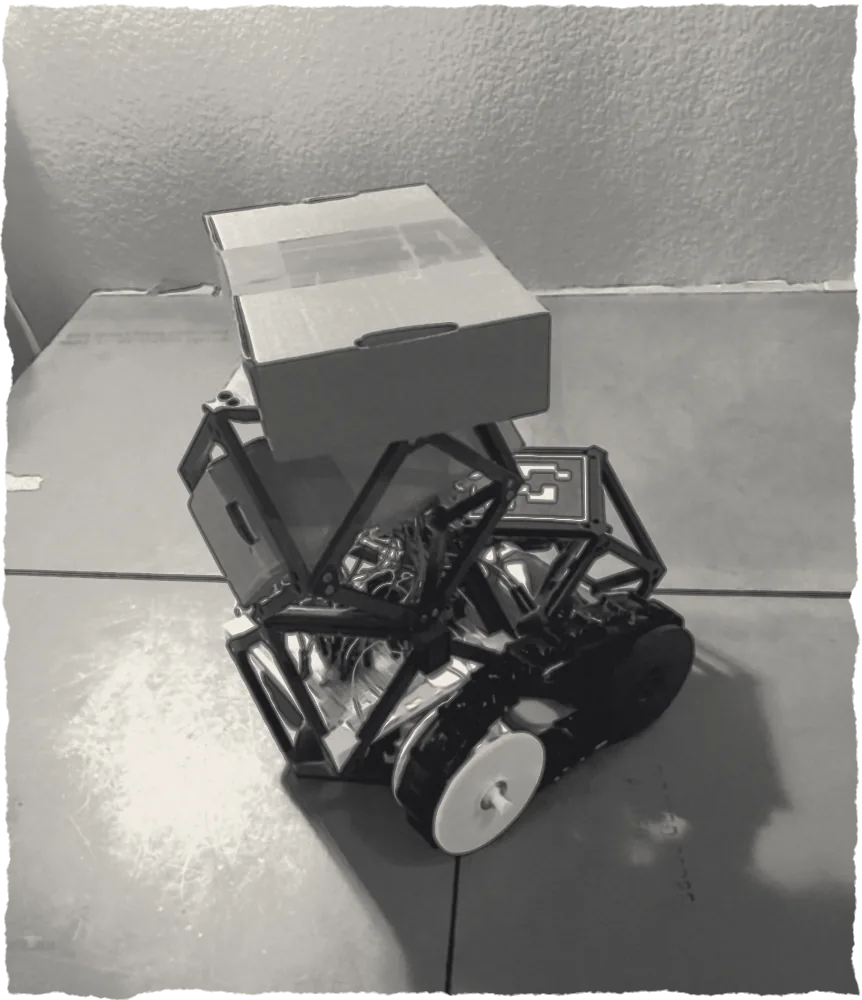
As a freshman I found mine: a group of friends a year older than me who had been building underwater robots in a garage since sixth grade. Our first robots were janky in every way a robot can be. We fixed them, broke them and fixed them again, and somewhere in all of that, those people became my best friends in the world.
Together we turned the garage into Project Nebula, a nonprofit that helps other students start teams of their own.
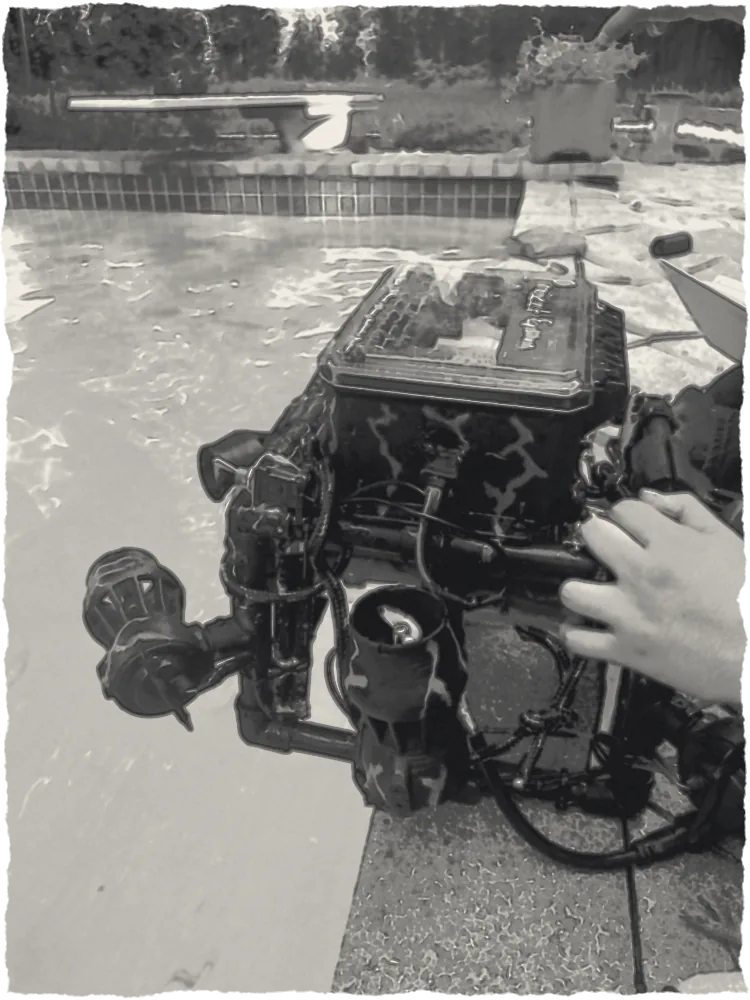
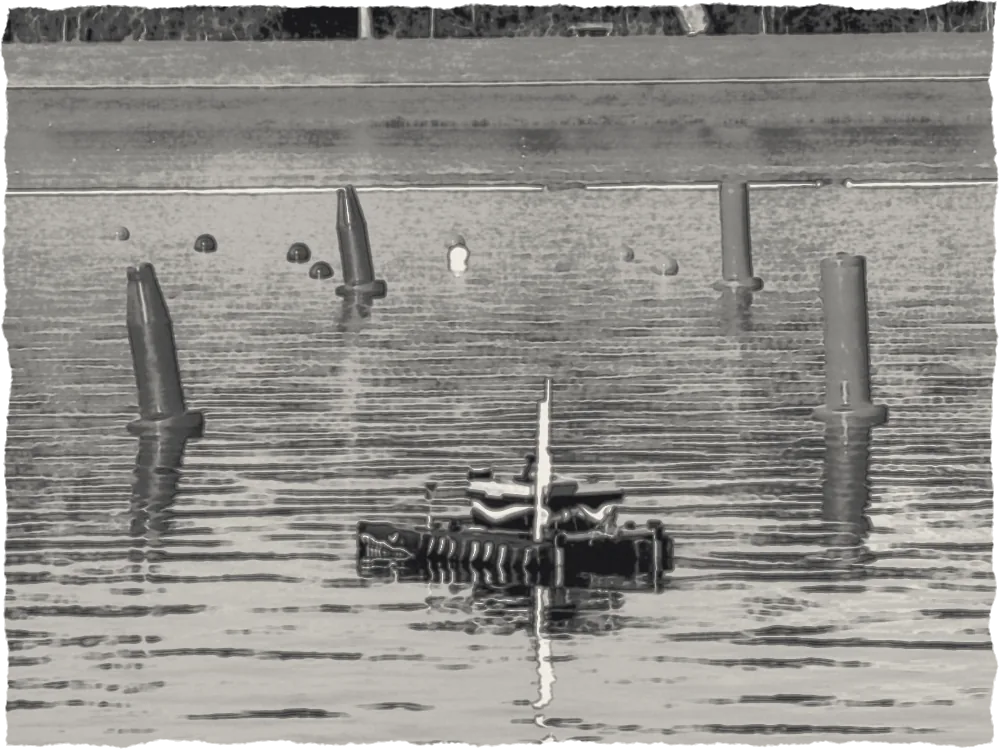
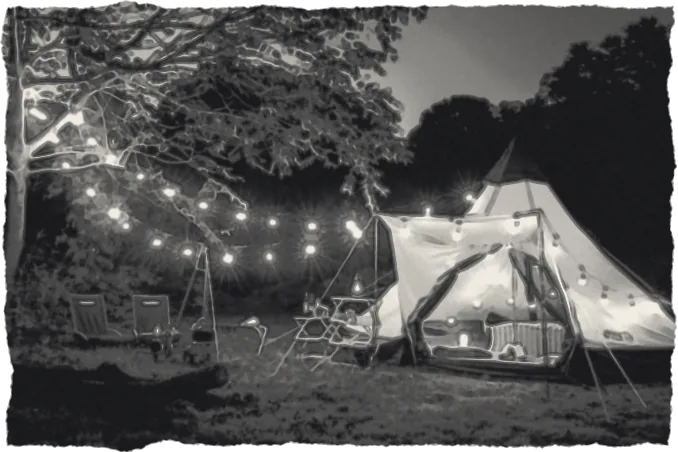
At school I took over the code for our autonomous boat. Some of my favourite hours have been late nights with that team, just vibing until the boat finally did what we asked. More than once, our high school boat finished ahead of MIT and Cornell.
One summer we took a submarine we’d built in a garage for about $650 all the way to California. It sat beside machines built by university teams from nine countries, and we came home with two awards.
But when I think about that summer, I rarely think about the competition first. I think about the beach, and ridiculous arguments that somehow lasted for hours. I think about cooking quesadillas with teams we’d only just met, and handing out drinks to strangers who became friends.
I think about wandering through Irvine late at night, into a square full of lights and familiar sounds, and feeling for a moment that I’d found another small piece of home.
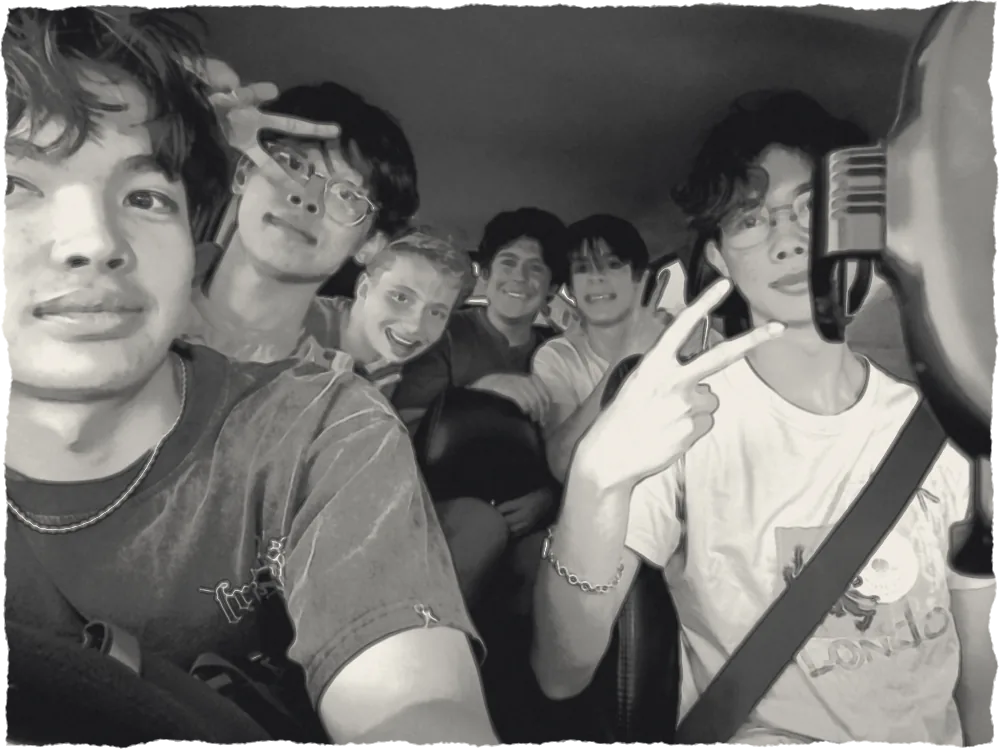
Most of all, I think about the people I was there with. They’re a year ahead of me. Soon we’ll be scattered across different places, and I know it won’t ever be quite the same.
I wish I could keep those nights a little longer.
The bifurcation diagram of the logistic map: as a parameter grows, one steady value splits into two, then four, then eight, and then into chaos. A small cobweb diagram shows the iteration for the current value.
四道MichiThe way
一人では、すべてはできない。
For a long time I believed that if I worked hard enough, I could figure anything out.
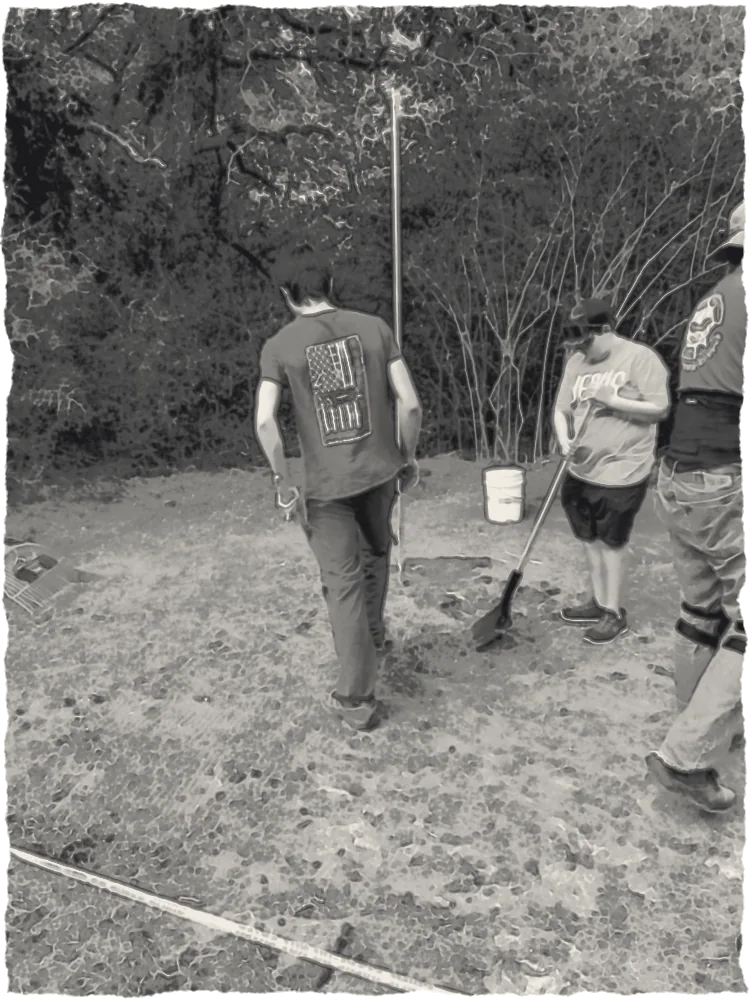
Scouting gave me my first taste of leading. At Camp Okami in Japan I met Scouts from all across Asia. We climbed the tiers of Knot-Tying Ninja one knot at a time, and played soccer in the rain until the mud made us all one team.
At Camporee I got my patrol chanting loud enough to shake the pines, and we walked away with the Scout Spirit award. For my Eagle project I designed, funded and built a tetherball court and soccer goals for a school, with twenty volunteers beside me. Even then, I thought leading meant doing the most.
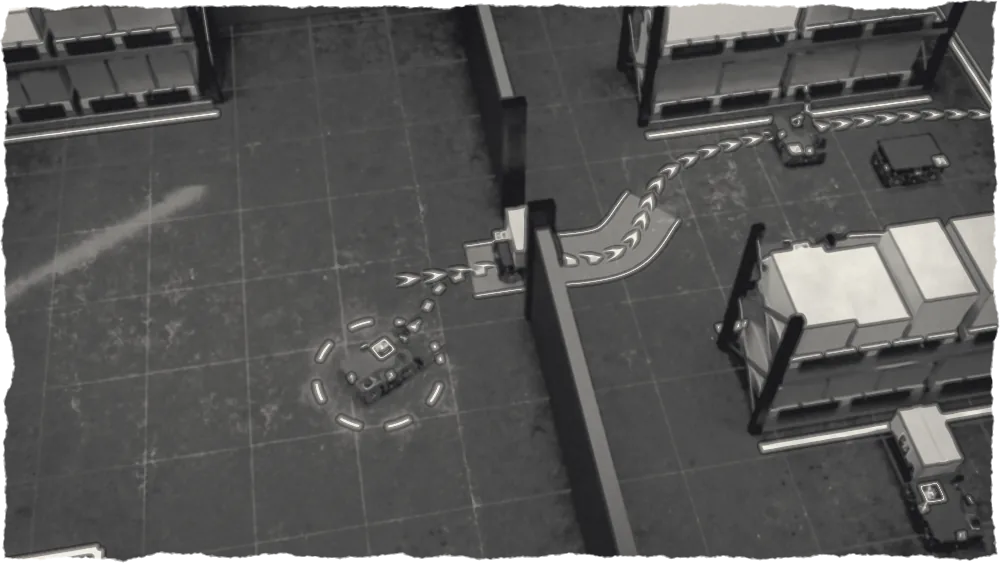
Then came a spring break with our FRC robot. Every night I worked until three in the morning. I did the CAD, the build, the wiring and the code myself, partly because I wanted it done right and mostly because I was too stubborn to stop. We made it to state. But somewhere in those nights I recognized the harbor from my simulation: one boat taking every task for itself, and the whole fleet slower for it.
This time, I was the boat.
One boat runs a tour through every task on the course, CAD, build, wiring and code, while a clock runs through the night. Beneath it, a schedule: done in series by one boat, the time is the sum of the tasks; shared among four, it is only the longest.
The teams that stay at the top for years aren’t the ones with the most stubborn person. They’re the ones that remember the most, and pass it on. The greatest things I can build are things I could never build alone.
When I was a freshman, one of my favorite seniors, Bryan Chan, said, “I don’t think Liam is capable of burning out.” I took it as a challenge, and that spring break showed me exactly where my edge was. I still mean to prove him right. But I understand now that a fire doesn’t last because it burns harder. It lasts because there are other hands around it.
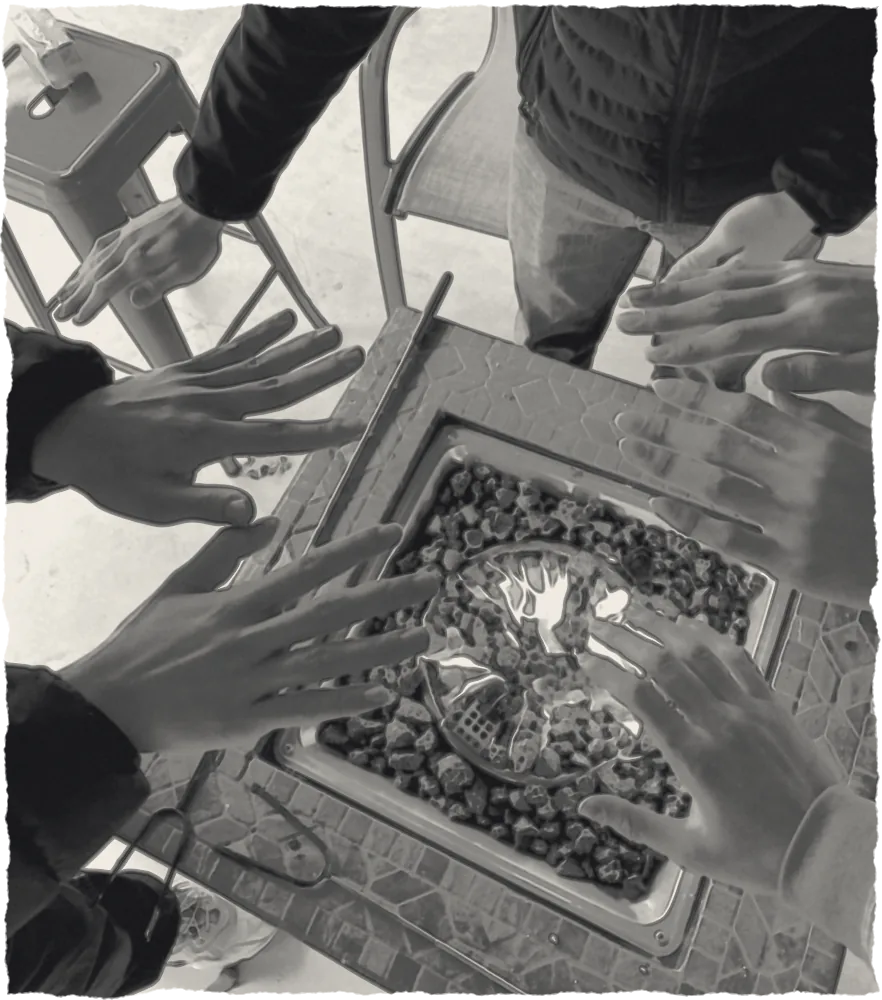
So now I build teams. My modular robots and drones are big group efforts. Through Project Nebula I’ve taught about a hundred students myself, and our programs have reached more than 1,150 in five states.
I started my school’s research society because I had been its only science-fair researcher, and I didn’t want the next person with a strange question to be alone with it. I don’t teach because I know enough. I teach because everything I know, someone handed to me.
Fireflies in a field at dusk, each blinking to its own rhythm. Each nudges its beat toward the others’ light, and as the coupling grows the whole field falls into one slow pulse; a small circle in the corner shows every rhythm as a dot, and an arrow grows as they synchronise.
五鶴TsuruThe crane
一つずつ、折り目を重ねて。
I had spent years learning to build things, and years more learning why they didn’t behave the way I expected. A robot that works perfectly on a screen can fail the moment it touches water. A model can be elegant, its equations correct, and still leave out the one thing that matters.
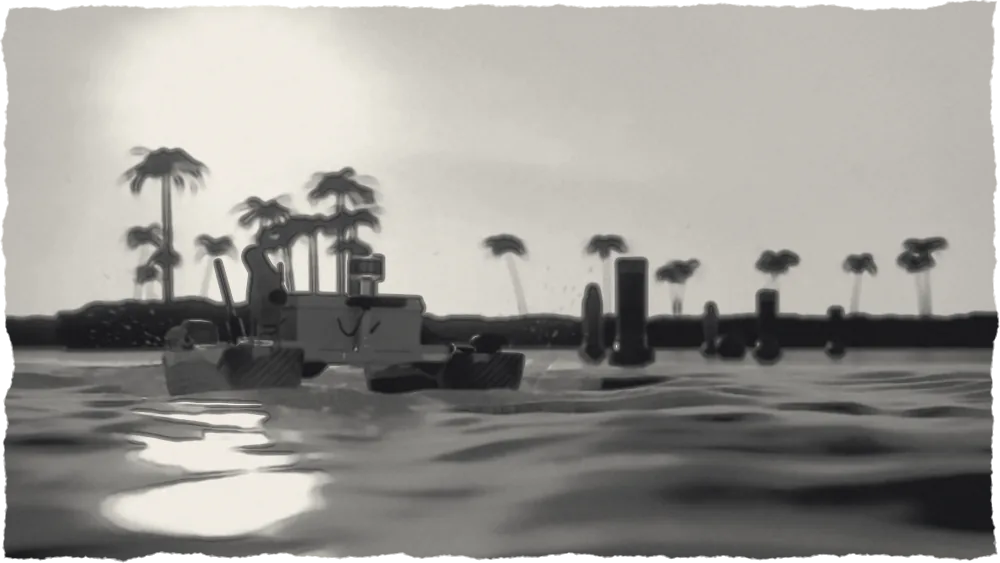
Testing our boat meant a lake, a trailer and a whole day, and when something failed, it never failed the same way twice. I wanted to understand the distance between the world we imagine and the world that exists.
So I began building another world.
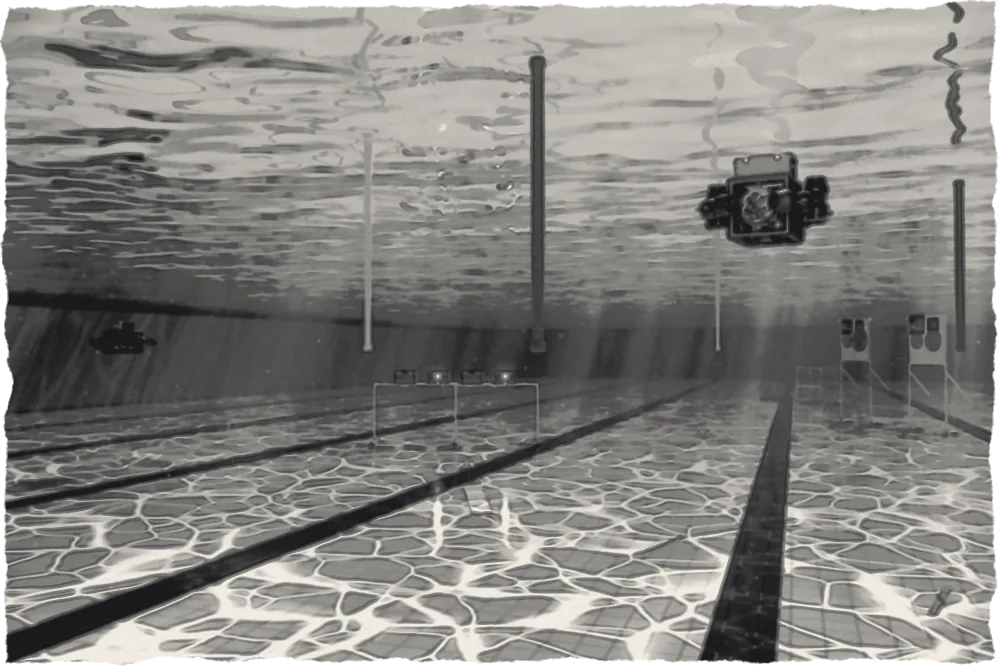
Everything came with me: the Unity I’d taught myself making a video game in sixth grade, the mathematics I’d chased down the well, the robots my friends and I had broken and fixed. I named it CRANE, after the bird my mother folds. A crane is at home in water, on land and in the air, the way I’ve always wanted to be at home in many things at once.
The loop of reinforcement learning, running: an observation passes forward through a small neural network, layer by layer; its actions go out to three bodies, a boat, a submarine and a drone, each with its own equations of motion; the world answers with the next observation and a reward, carried back to the start; then the error runs backward through the network and its weights change a little. Beneath, the return rises over the episodes, beside the policy-gradient rule that raises it.
CRANE lets one robot’s mind live in many bodies, boats and submarines, rovers and drones, inside a world that tries honestly to match this one and measures where it doesn’t. I wrote it almost entirely alone, but it was never for me alone. My teams test their ideas there before they risk the water, and spare computers run its experiments by the thousands.
It won Best of Fair in robotics at the Red River Science and Engineering Fair, and much of my research grows out of it, all circling one question: how do you make a simulation tell the truth?
I built a world so that I could understand this one.
A folded paper crane in flight, its wings beating, over the grid of a simulated landscape.
六大海TaikaiThe great sea
されど、空の深さを知る。
Not everything I love has to mean something.
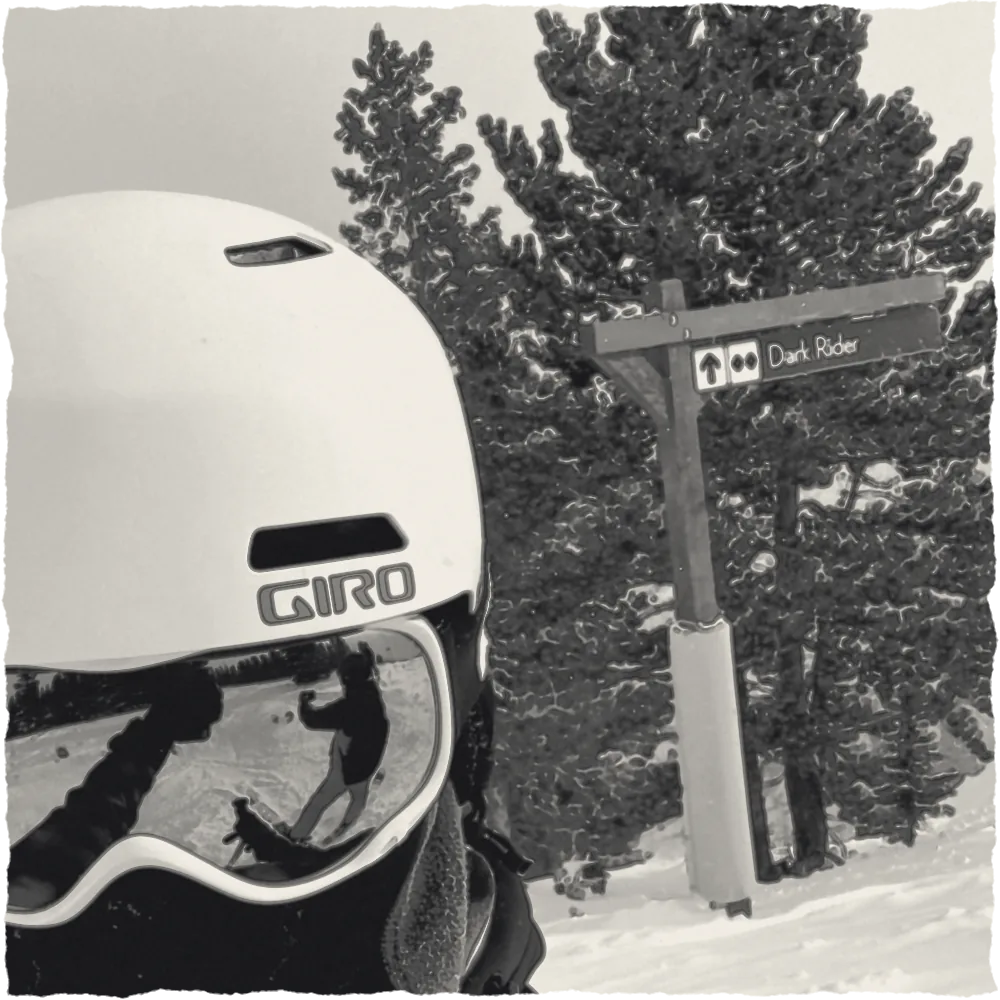
I love running at the edges of the day, before dawn breaks or into the last of a sunset, until my head goes quiet. I love the day I finally pulled up and over the bar into my first muscle-up; someday it will be a planche. I love skis on a double black, the whole mountain dropping away below me, every turn a small thrill.
And I love music: R&B for slow hours, indie for long runs, hip hop for late nights. It changes with the seasons, so it lives on the slip of paper marking your place.
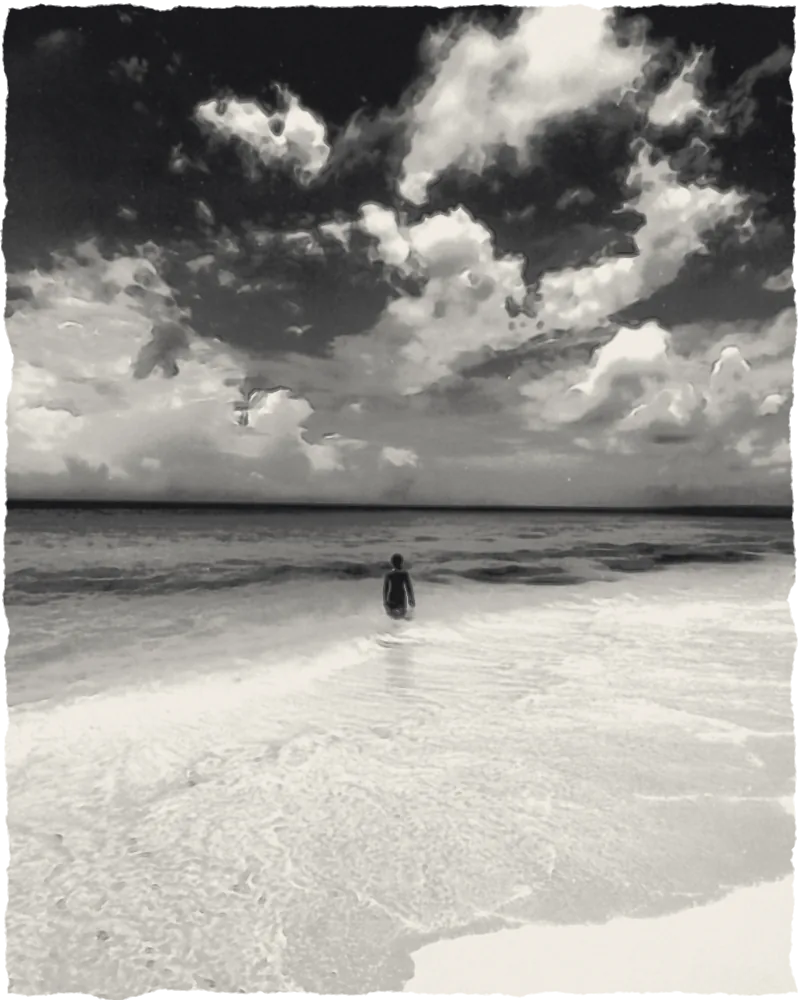
I want to build things that matter: robots and simulations that help with real problems, and maybe a company one day. I want to stand in rooms full of people who know far more than I do, because the people I’ve met are the reason I’m anywhere at all.
Beyond that, I honestly don’t know who I’ll become. I can derive the equations of motion for a robot, but not for the person I’ll be in ten years.
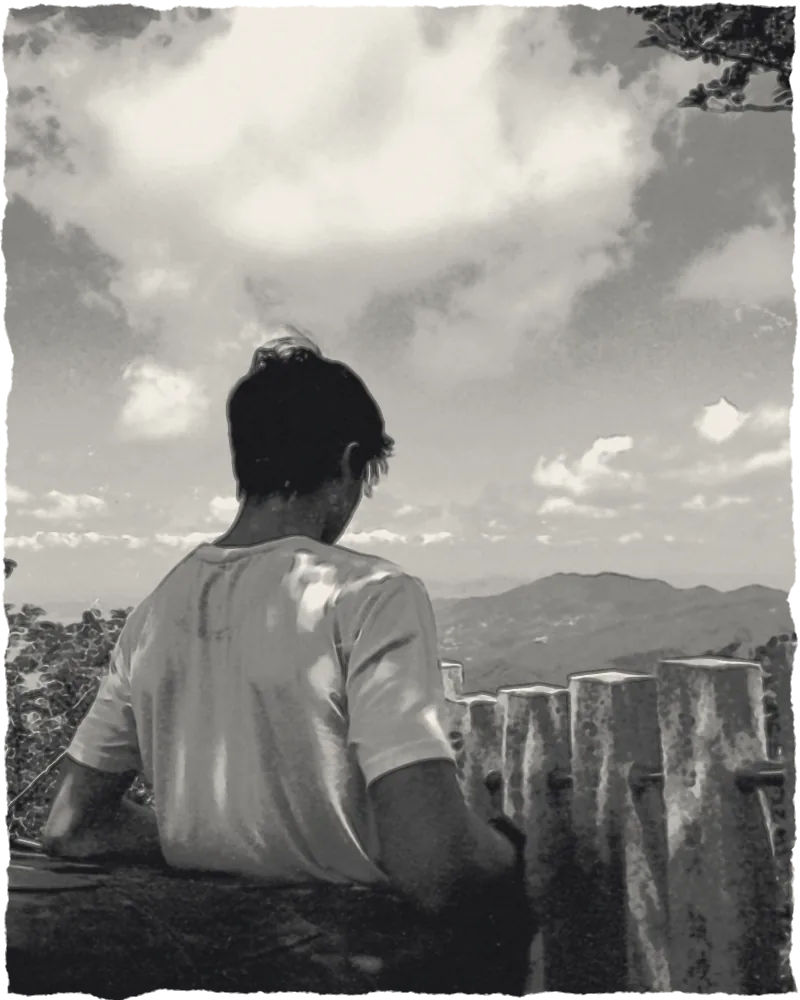
There is more in the world than I will ever understand. I used to find that thought terribly sad. I could spend a lifetime on one small corner of mathematics and leave most of it untouched. There are mountains I won’t climb, places I won’t see, people whose stories I’ll never hear.
But I think I’d be sadder if the world were small enough to finish.
An ink drawing looking up from the bottom of the well: a ring of stone, and through it, open sky.
There is an old saying about a frog who lives in a well and knows nothing of the great sea. A line added much later says that even the frog knows the depth of the sky.
井の中の蛙大海を知らず。
されど空の深さを知る。
I have spent most of my life looking down into things, trying to see how far they go. Lately, I’ve been looking up more often.
And there is still so much sky.